Cart 0
Discover a place not held solely by where it sits in the world, nor the season you’ve found yourself in- but as it has always been, by the landscape of its people.

WINTER MENU RESEARCH - Valentine’s Week 

February 2026

Thank you for dining with us at Archipelago for this special Valentine’s Week. This week, our menu is not only driven by people in place, but of love that fuels it — love of family, community, and planet. Here, you can revisit and dive deeper into the stories of incredible Filipino-Americans, the worlds they made, and ideas that have actively shaped our food system. 

Guiding our menu forward for the winter are the stories and places of ... 

INDIPINOS OF BAINBRIDGE, VICTRIO VELASCO, ELIZABETH & SALVADOR, SHARON & BOB, TRINITY ORDONA, THE BELTRANS, CHERA & GEO, BOB’S QUALITY MEATS, THE JENKINS, DOROTHY & FRED CORDOVA, BAYANI BOX

At Archipelago, these elements combine to answer a driving question—what does it mean to cook Filipino American food in the Pacific Northwest? And how are we transformed in the process?

For this specific window of time, we are centering Radical Love as our primary research tool. We are looking at the partnerships, marriages, and chosen families that functioned as a glitch in the machinery of empire—uncovering how these bonds allowed our community to not only survive but to build a sanctuary of belonging. To celebrate love this week is to recognize that our presence here is a result of those who dared to stand together across cultural and political lines.

We understand our experience holds a lot of information. Much of it we don't have the time to share fully. Please explore this resource as a way to engage more with the stories we tell and the processes we are developing to do so. There is a questions and comments form at the bottom if you need more. Maraming salamat!

Also… please enjoy our Winter Tasting Menu Soundtrack while you read!


This resource was written by Amber Manuguid with contributions from Hanover Vale. It reflects years of hard work and dedication by the entire Archipelago team, and we couldn’t be here without you.

unsplash-image-6HdQQdnhpMg.jpg

OUR CULINARY PHILOSOPHY 

As Archipelago develops its own culinary philosophy, we see ourselves nested inside a growing movement—one where cultural identity and the labor of storytelling are inseparable from the craft itself. Often, guests will ask our team, “What comes first, the stories or the food?” Truthfully, you have dined with us at a moment when the experience is returning to the core of its dream. This year, our archival research and our culinary exploration have never been more interwoven.

There is a method to the madness. In our kitchen, we treat food as a text—a way to reclaim histories that have long been missing from the standard record. We find ourselves in the archives uncovering the legacy of an individual so strikingly impactful, it feels like a such a huge loss that we didn't hear of them sooner. From that spark, we work to progress our craft, utilizing technical mastery not as a performance, but as a rigorous framework to honor the human element of every story.

In the realm of fine dining, we believe true greatness is found in the pursuit of culinary sovereignty. This means understanding that food is as much theory as it is practice. It is the scientific rigor of the lab, the grit of the farm, and the soul of the community that holds it all. Our work is an act of sophisticated "re-coding"—using world-class culinary tools to demonstrate that Filipino flavors possess an inherent complexity that stands entirely on its own.

Our winter menu explores this by developing food around core tenets—the platforms that hold our theories of belonging:These can be understood as: 

• Time and Place 

• Cultural Relevance 

• Skill and Craft 

• Cohesion 

• Flavor 

With this framing, we try to capture stability on an idea’s bleeding edge. We are investigating what cuisine means, who it is for, and by whose hands it is defined. By centering these stories of love and leadership, we continue the work of determining a regional FilAm cuisine that is a direct intellectual descendant of those who fought to be remembered.

For more thoughts throughout the year, get behind the scenes with us on our podcast, Global Archipelago.

MERYENDA

INDIPINOS OF BAINBRIDGE ISLAND

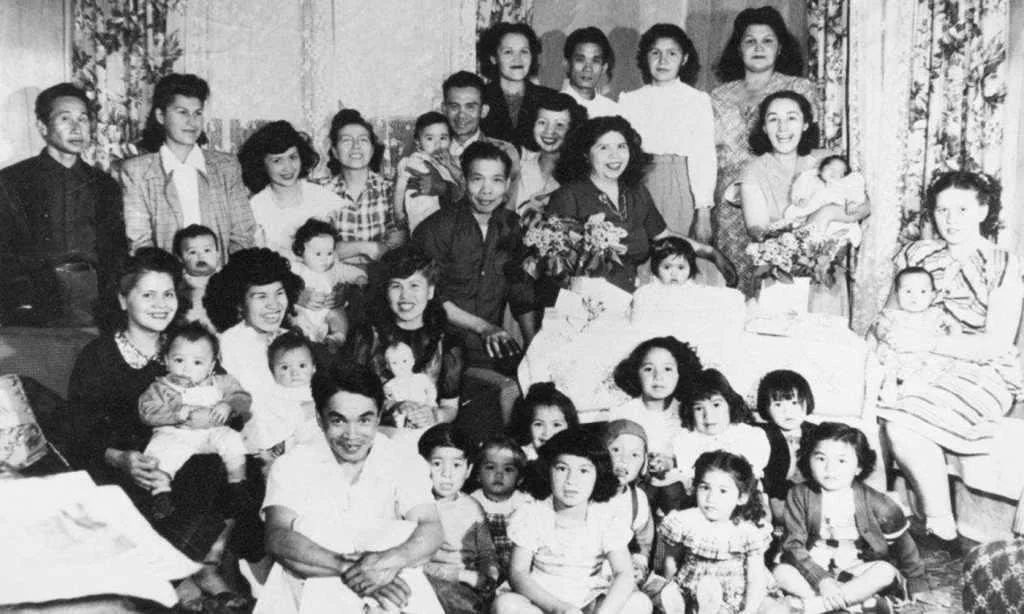
At Archipelago, we believe the most profound expressions of "local" are found in the stories of how people chose to build community against the odds. This Valentine’s week, we look across the water to Bainbridge Island—a place that was once more well-known than Seattle for its bustling ports and farming towns, and remains today a storied landscape of cultural mixing and overlap.

The Indipino community of Bainbridge Island is a singular example of what happens when two displaced or marginalized groups find home and family in one another. In the early 20th century, First Nations women crossed the northern Canadian border to work in the island’s berry fields and ports. Many were survivors of residential schools—a violent tool of genocide designed to sever their connection to land and culture.

On those same shores, they met men from Ilocos, Philippines, who had taken jobs in the ports and on farms to escape the machinery of empire. In the rows of strawberry fields, these two groups found a deep, shared kinship. They fell in love, raised families, and negotiated entirely new identities across cultural, social, and political lines. This was love as an act of resistance; a refusal to be isolated by a world that sought to keep them both on the margins.


Meryenda: The Labor of Rest

This course is inspired by Meryenda—the traditional Filipino mid-afternoon meal. On Bainbridge, Meryenda was more than just a snack; it was a vital pause in the grueling labor of the fields and ports. It was the moment where the Ilocano farmer and the First Nations laborer shared space, food, and conversation. In these small moments of rest, a radical solidarity blossomed.

To honor the Indipino legacy is to acknowledge that our presence here as Filipino-American settlers is part of a complex, beautiful, and sometimes painful weaving. We recognize that while our ancestors arrived through the tides of one history, they found refuge and family in the arms of another people fighting to reclaim their own.

"Local cuisine is not just about the ingredients found in the soil; it is about the intentions of the hands that planted them together." — Archipelago

Image featured in Honor Thy Mother

Meryenda: INDIPINOS OF BAINBRIDGE

Foundation: OUR RESEARCH PROCESS

Course 2: VICTRIO VELASCO

Course 3: ELIZABETH & SALVADOR

Course 4: SHARON & BOB

Course 5: TRINITY ORDONA

Course 6: THE BELTRANS

Banuhay: CHERA & GEO

Interlude: BOB’S QUALITY MEATS

Course 8: THE JENKINS

Course 9: DOROTHY & FRED CORDOVA

Course 10: BAYANI BOX

Dialogue: THOUGHTS OR QUESTIONS?

unsplash-image-EBHedyz5JSM.jpg

OUR RESEARCH PROCESSES 

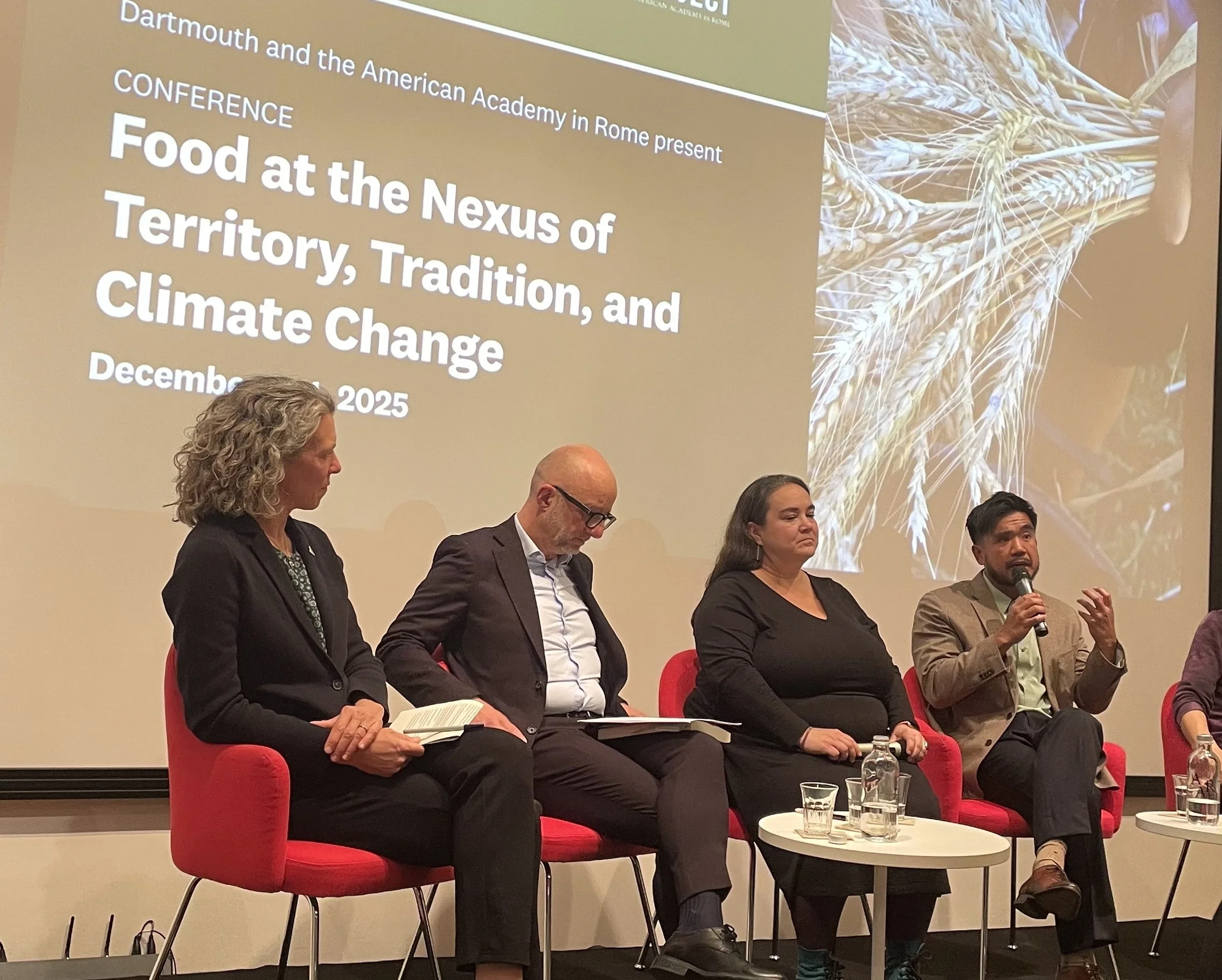
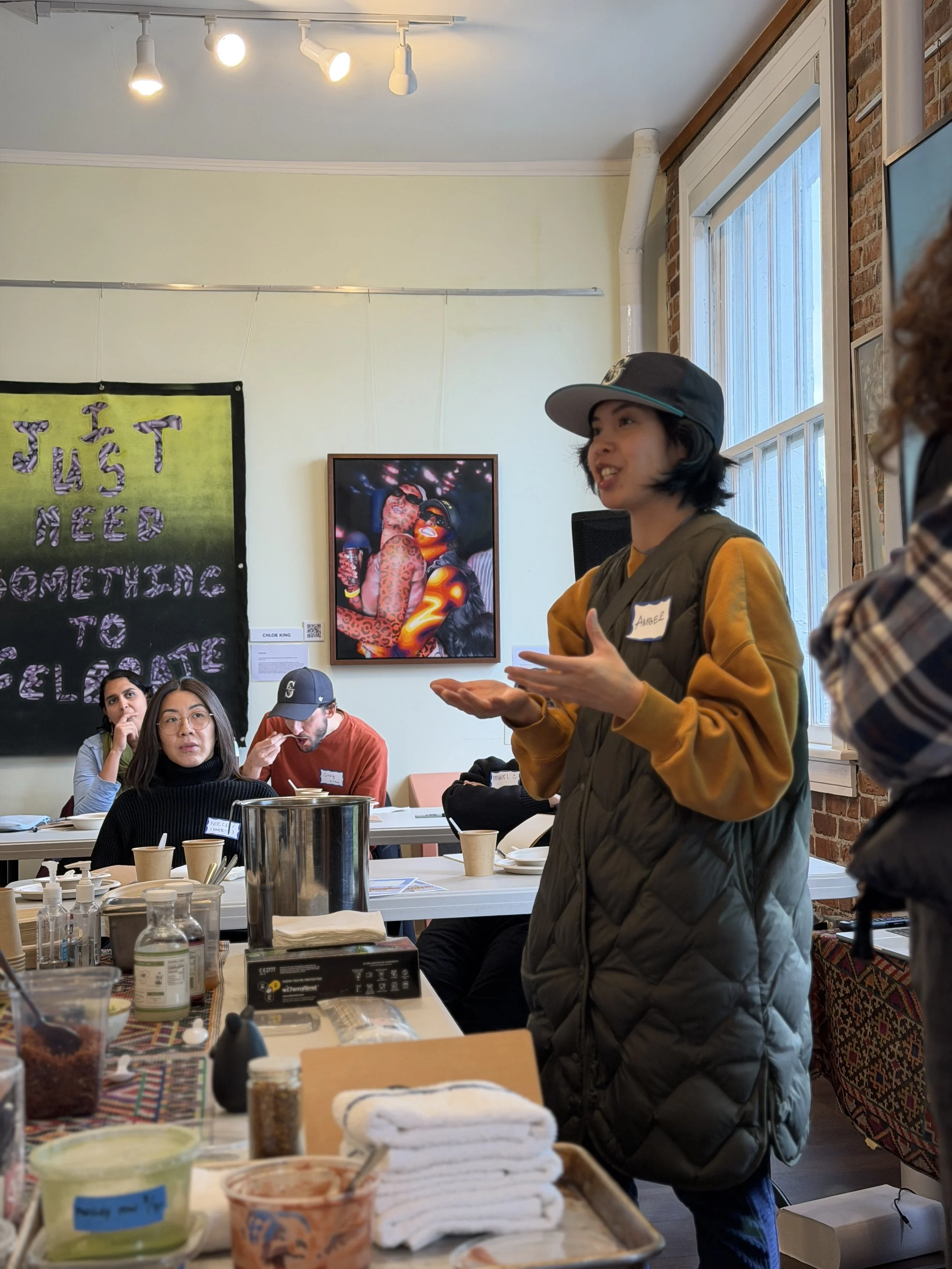
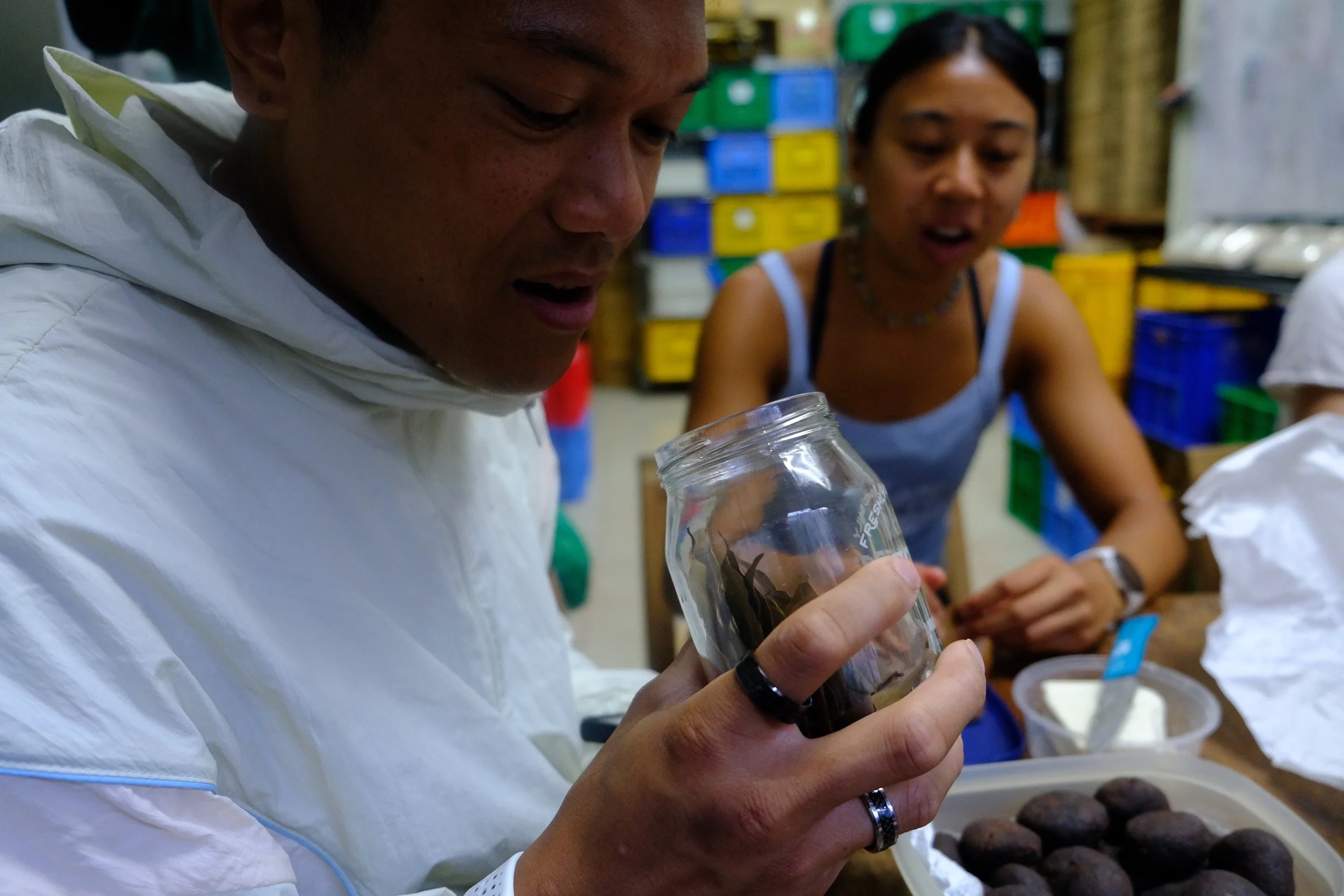
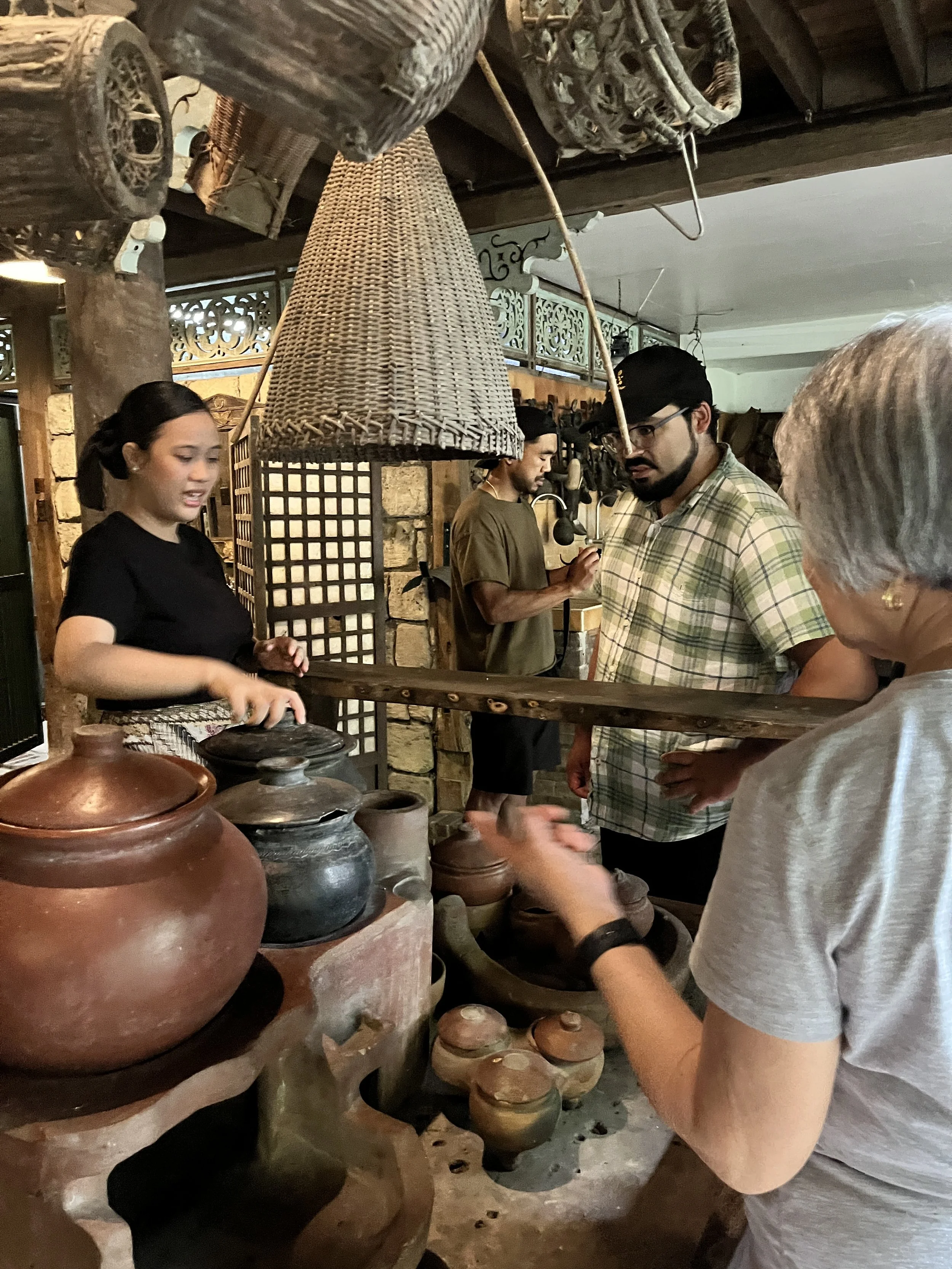
Our research process is an ongoing, formal exploration of archives, the cutting edge of food- studies texts, collaborations with other cultural workers, and an exploration of the interpretations of FilAM food from our chefs. We read recently published academic articles in Filipino/a/x Studies, Geography, and food science. We build out research tools and repositories like digital maps, foraging guides, and library resources for our team to access. Current projects also include working on developing programming that can help us actively collect stories from our communities. Above all, we try our best to sit in the present-ness of our community's initiatives. Those publishing their own writing, hosting film-viewings, and asking for collaborators. Research is also to assess the state of the present, to come up with the right solutions and interventions to preserve the future. 

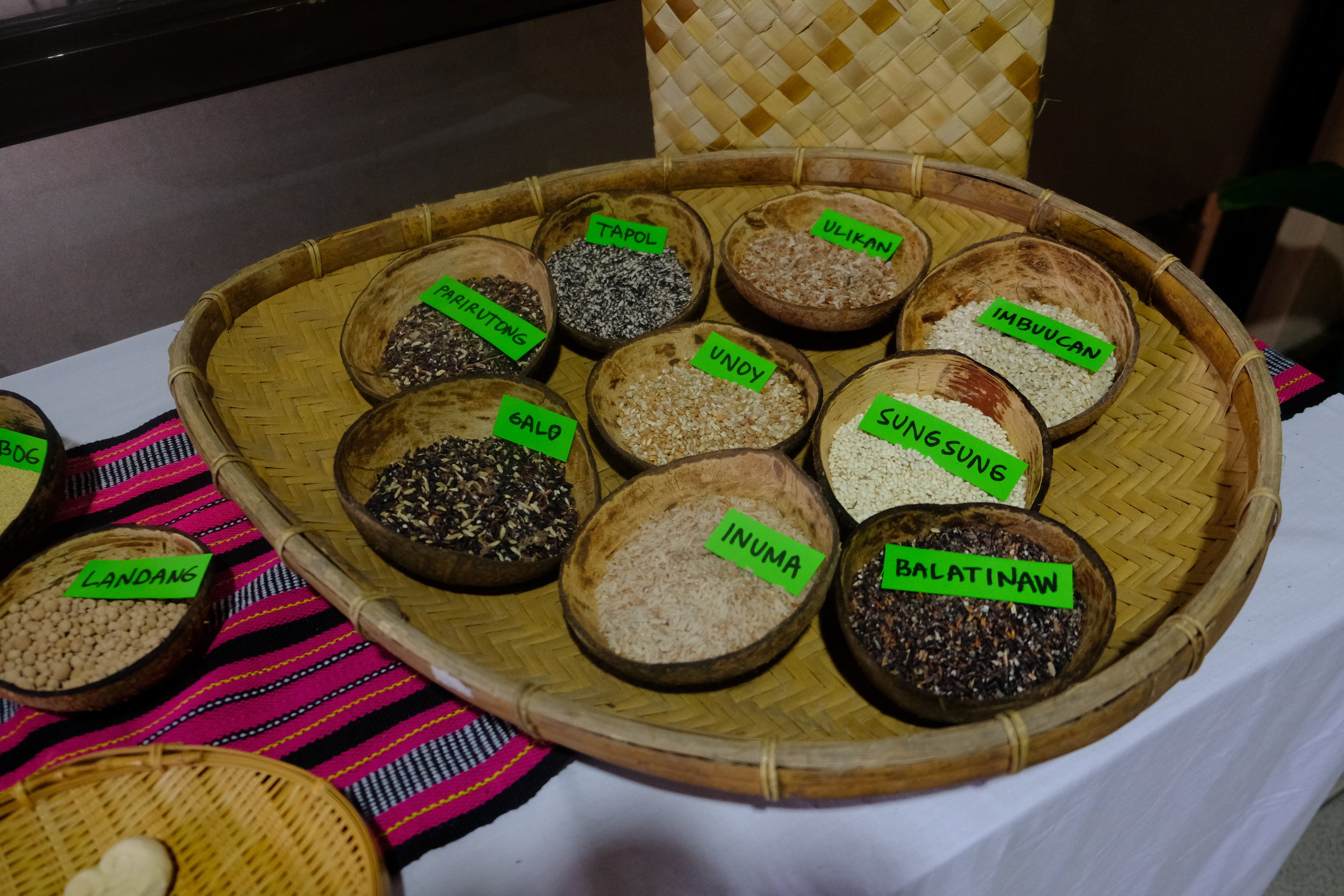
Thankfully, we have had the most incredible models. FANHS and their published texts including Filipinos in Puget Sound (2009), and Filipinos in the Willamette Valley (2010), have given us a running start. From experiments in growing rice at Kamayan Farm run by Ari de Leña, to the form-bending work of artisans like Lexa Luna and Natasha Alphonse, we find ourselves continuously inspired. While we still have much to learn, like recipes, we are building out and collecting our own stories to live on and be told during our services. 


Especially important to us are the conversations we are able to have with our farmers, foragers, butchers, and fisherfolk. Our agricultural system is so interconnected, yet resources don't flow as freely. As we hear about our partners' needs directly, we hope to continue to be in a position to purchase products, create value-added items, and volunteer where we can. This can look like lending our voice and reach in struggles for justice, such as our work with Good Food Community in the Philippines.

When you dine with us, you are not just supporting the work of chefs. You directly support the quality of research, preservation, documentation, and development of new techniques that work to actively address the future of culturally relevant food in an era of increasing change. 

Course 2

VICTORIO VELASCO 

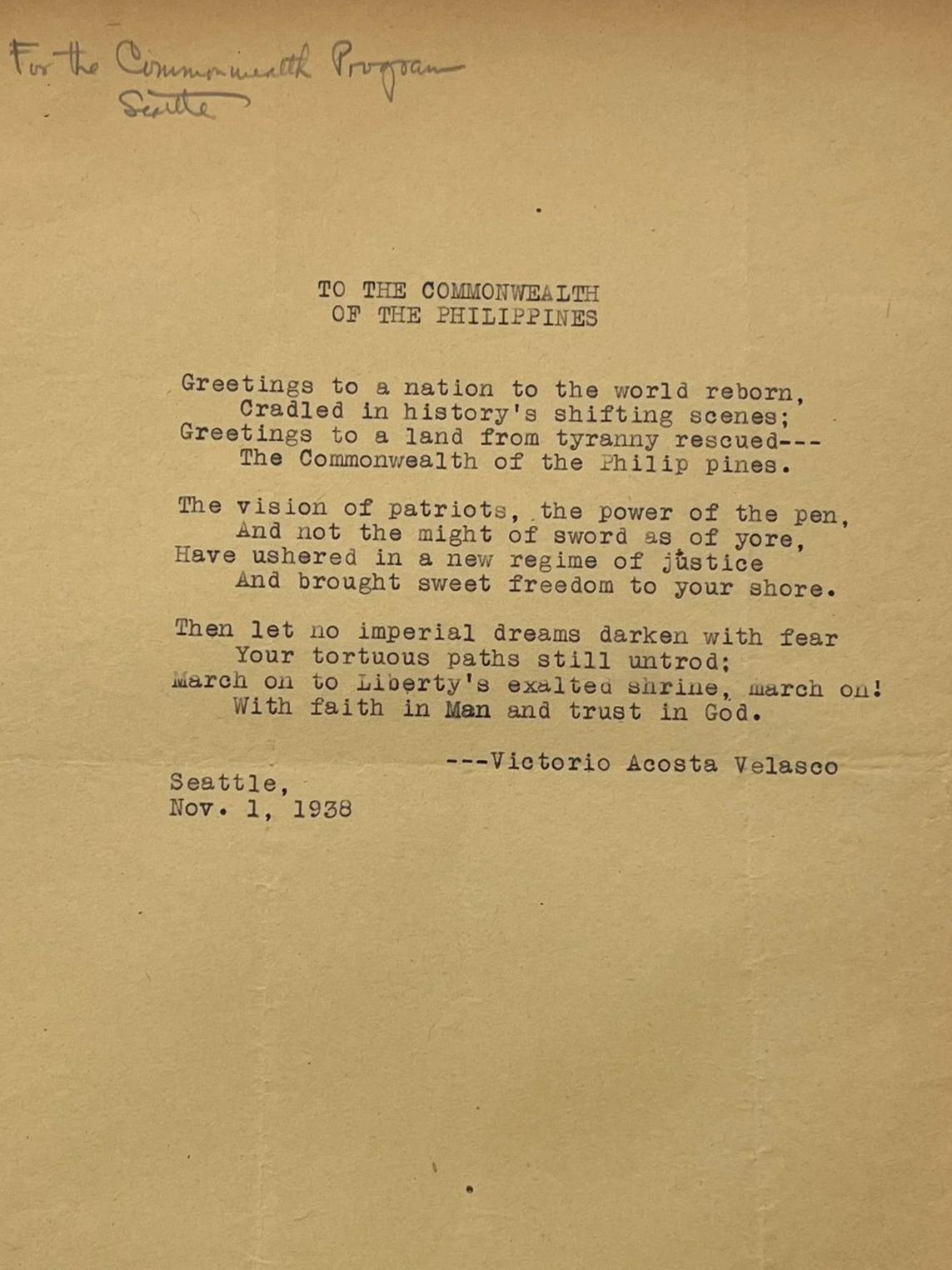
It is never easy to succinctly honor the lives of great people. Victorio Velasco's story, featured for our dish of kinilaw - perhaps the oldest recorded dish in the  Philippines - is a truly PNW story of finding one's voice. And literally, writing history with it. 

The Filipino Student Newsletter (University of Washington Special Collections)

At Archipelago, we often ask how a person becomes a guiding light for their people—how a life’s work can outlive the person and continue to nourish a community long after they are gone. In the archives of Victorio Velasco, we found the answer: a radical, expansive love that stretched from the cannery rows of Alaska to the halls of the United Nations.

The Poetry of Belonging

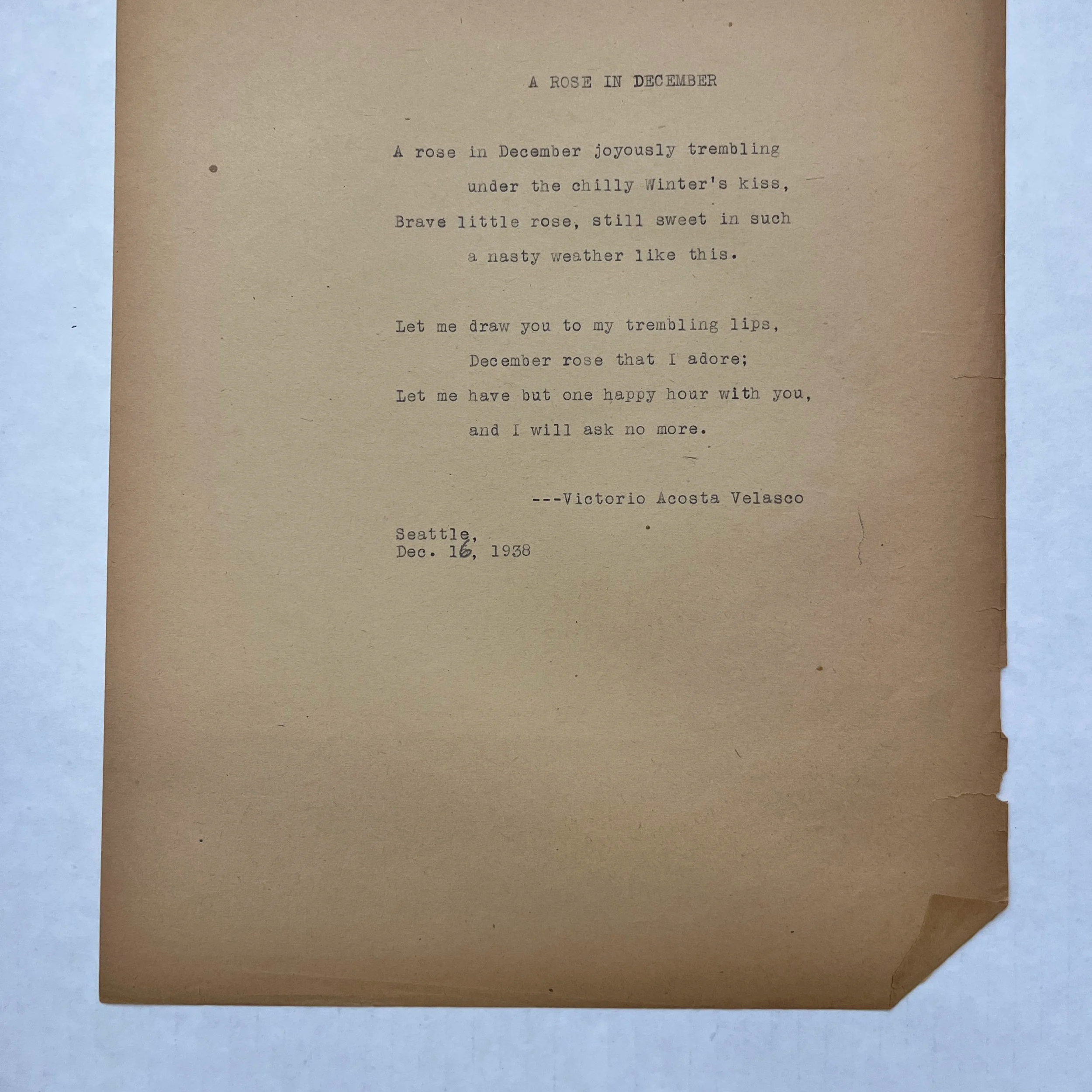
When our team stepped into the University of Washington’s Special Collections to sit with Velasco’s personal papers, we expected to find a resume of accomplishments. Instead, we found the "all the trappings of a life" fueled by devotion. We found literal poetry tucked between address books of Filipino-American families—records of a man who spent his long, grueling hours in the Alaska canneries dreaming of a more just world for his brothers and sisters.

This was a love that kept meticulously organized address books, ensuring no one in the diaspora was forgotten. It was a love that penned pamphlets for housing justice to fight exclusionary zoning, and a love that looked beyond its own borders to send powerful statements to the UN calling for peace during the Algerian War. To Velasco, to love your country was to fight for the dignity of its people, wherever they might be.

An Invitation to a Greater Hunger

The richness of Velasco’s life poses a challenge to us at the restaurant: which stories of his devotion do we tell? We’ve realized that his legacy is an invitation—a way to instill in our guests a "hunger that cannot be satisfied through food alone." It is a hunger for justice, for connection, and for the preservation of our shared history.

Velasco’s life answers the questions we ask every day at Archipelago. He shows us that our work—whether it is cooking a meal or organizing a community—is a way of writing a love letter to the future.

Crafting the Legacy

As we share these stories with you, we are participating in the continuation of Velasco’s work. We are learning how to be "settlers of color" who collectively determine how our history is remembered. We don't just cook for the present; we cook to honor the "dreams made and letters sent" by those like Victorio, whose love for his community became the foundation upon which we stand.

Meryenda: INDIPINOS OF BAINBRIDGE

Foundation: OUR RESEARCH PROCESS

Course 2: VICTRIO VELASCO

Course 3: ELIZABETH & SALVADOR

Course 4: SHARON & BOB

Course 5: TRINITY ORDONA

Course 6: THE BELTRANS

Banuhay: CHERA & GEO

Interlude: BOB’S QUALITY MEATS

Course 8: THE JENKINS

Course 9: DOROTHY & FRED CORDOVA

Course 10: BAYANI BOX

Dialogue: THOUGHTS OR QUESTIONS?

victorio-velasco-spirit-of-christmas-bg.JPG

COURSE 3

ELIZABETH & SALVADOR DEL FIERRO

In the spirit of celebrating love that builds a world for others, we share the story of Elizabeth and Salvador Del Fierro. Theirs was a partnership forged in the rigorous labor of the Ketchikan canneries—a love story that would eventually transform the cultural and political landscape of Seattle.

Salvador, a titan of the Filipino community, met Elizabeth in Ketchikan, Alaska. She was of Italian-American descent, working alongside Salvador in the canneries. In an era where racial boundaries were strictly policed, their union was a radical act of bridge-building. Elizabeth didn’t just join Salvador’s life; she joined his fight. She utilized her position to advocate for Filipino-American rights and build labor power, proving that their love was a shared commitment to dignity for all workers.


From Garlic Gulch to the Filipino Community Center

The Del Fierro legacy brings a special resonance to our home here in Hillman City. This neighborhood was historically the heart of Seattle’s Italian-American community—often pejoratively called "Garlic Gulch." It is a beautiful irony that this same soil, once defined by Italian heritage, became the site where Salvador and Elizabeth helped catalyze the fundraising for the Filipino Community Center on MLK Way.

Salvador’s political acumen was legendary. While Elizabeth helped anchor their advocacy, Salvador organized the "Magsaysay for President" club, strengthening ties between the US and the Philippines post-WWII. Together, they worked to ensure that the Filipino community had a physical home—a center that remains indispensable today, offering language classes, housing, and meals for seniors.

From the left side, Salvador and Elizabeth Del Fierro toasting to Ramon Magsaysay in 1953, Filipino Forum, 1953


A Legacy of Desegregation

Their love story extended into the halls of justice. In Alaska, Salvador worked tirelessly to desegregate public schools, a battle fought in the same neighborhoods where Filipinos and Alaska Natives were forced into close proximity within the Stedman-Thomas Historic District. While the history books often separate these struggles, the Del Fierros’ lives suggest a different story: one of shared traumas and shared victories.

The Craft of Connection

To celebrate Elizabeth and Salvador is to celebrate the "intricate nuances" of our history. It is a reminder that our community was built not just by individuals, but by couples who dared to cross lines. Their story informs how we determine our history today—not as isolated groups, but as people whose lives and loves are inextricably linked.

As we serve this course, we honor the "Garlic Gulch" roots of our neighborhood and the Ilocano heart of the Filipino Community Center. We invite you to taste the history of a love that didn't just build a family, but built a sanctuary for an entire diaspora.


Meryenda: INDIPINOS OF BAINBRIDGE

Foundation: OUR RESEARCH PROCESS

Course 2: VICTRIO VELASCO

Course 3: ELIZABETH & SALVADOR

Course 4: SHARON & BOB

Course 5: TRINITY ORDONA

Course 6: THE BELTRANS

Banuhay: CHERA & GEO

Interlude: BOB’S QUALITY MEATS

Course 8: THE JENKINS

Course 9: DOROTHY & FRED CORDOVA

Course 10: BAYANI BOX

Dialogue: THOUGHTS OR QUESTIONS?

ketchikan-alaska-bg.jpg


COURSE 4

SHARON TOMIKO & BOB SANTOS

Geography is often the silent ingredient in any cuisine. It defines what grows, who meets, and what flavors survive. In the heart of Seattle’s Chinatown International District (CID), the geography of the neighborhood was preserved by a love story that was as much about political fire as it was about personal devotion: Uncle Bob Santos and Representative Sharon Tomiko Santos.


Bob Santos, the "Uncle" of the CID, was a man of the streets. As a leader of the "Gang of Four," his activism was a masterclass in cross-racial solidarity, built on the belief that Filipino, Black, Latino, and Japanese communities shared a common struggle against displacement. While Bob was on the front lines—disrupting the construction of the Kingdome or rallying for "Hum Bows, Not Hot Dogs"—he found a partner in Sharon, whose own heritage was marked by the resilience of her family during the 1942 incarceration of Japanese Americans.

Sharon’s sense of justice led her from organizing the country’s first Day of Remembrance to the halls of the Washington House of Representatives. Together, they formed a power couple that protected the community from both the grassroots and the institutional levels. They met while fighting for the "Seattle Plan"—a quest for redress for internment survivors—proving that their romance was born from a shared commitment to righting historical wrongs.


The Legacy of Self-Determination

Today, the CID remains a community hub because of the shields these two held up together. As we share this dish, we honor the way Bob and Sharon negotiated life across cultural and political lines, leaving behind a model for how communities can—and should—self-determine. It is a reminder that the most enduring love stories are those that ensure the next generation still has a place to call home.


Meryenda: INDIPINOS OF BAINBRIDGE

Foundation: OUR RESEARCH PROCESS

Course 2: VICTRIO VELASCO

Course 3: ELIZABETH & SALVADOR

Course 4: SHARON & BOB

Course 5: TRINITY ORDONA

Course 6: THE BELTRANS

Banuhay: CHERA & GEO

Interlude: BOB’S QUALITY MEATS

Course 8: THE JENKINS

Course 9: DOROTHY & FRED CORDOVA

Course 10: BAYANI BOX

Dialogue: THOUGHTS OR QUESTIONS?

uncle-bob-ID-bg.jpeg

COURSE 5

TRINITY ORDONA

For decades, the story of the Filipino diaspora has been one of making space—finding room in dormitories, dance halls, and community centers to exist fully. But for pioneers like Trinity Ordona, space was not just found; it had to be forged through the fire of resistance. A scholar, reverend, and organizer, Trinity’s life is a testament to the power of a devotion that encompasses an entire community.


Forged in the Heat of Activism

In the 1970s and 80s, Trinity was a central figure in the movement against Martial Law in the Philippines. Yet, even within the radical organizations fighting for justice, she faced the stinging heat of intolerance as a Filipina lesbian. Rather than shrinking from this friction, she allowed it to transform her. She recognized that for a community to be truly free, it had to be inclusive of all its members.

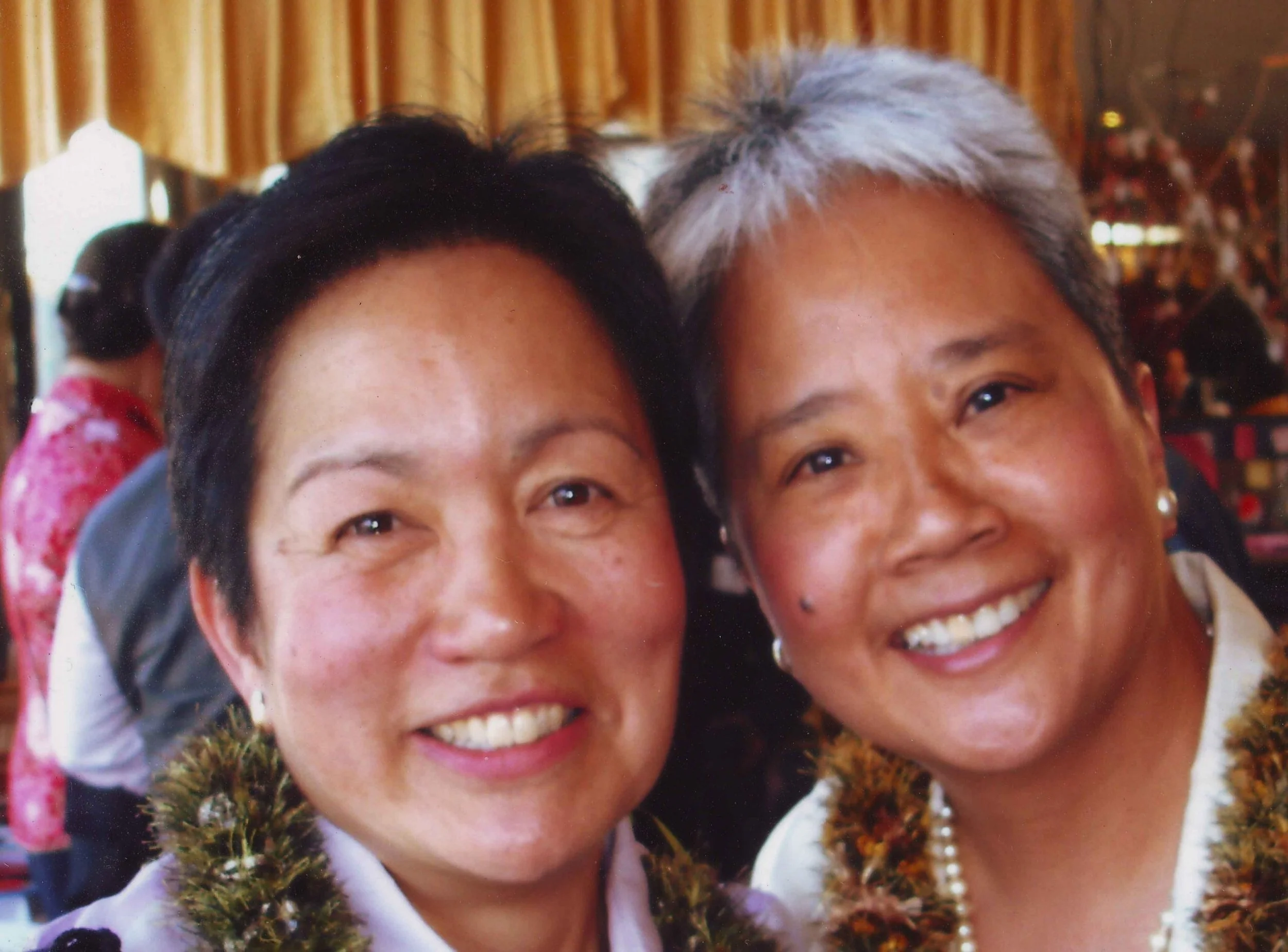
Trinity became a foundational force, establishing organizations and conferences that brought Asian Lesbians together for the first time. She didn't wait for permission from the state or from traditional institutions to validate her identity. This was evidenced most clearly in 1988, when she and her partner Desiree—a vocal contributor to the API lesbian experience—were married in San Francisco. Long before it was "legal," the ceremony was an act of self-determination. It was a declaration that her life, and her community, were governed by a higher law of belonging.

2008 Phoenix Award Honorees: Trinity Ordona (right) and her partner Desiree Thompson (left)

The "Talong" of Transformation

In our kitchen, we use the verb "Talong" to describe the process of intentional charring—applying fire to an ingredient until its skin is blackened and its spirit is transformed into something rich and deep. We see Trinity’s work through this same lens of alchemy.

Just as our community once celebrated a "mortgage burning" to symbolize the clearing of a debt and the birth of a physical home, Trinity used the fire of her activism to burn away the exclusionary boundaries of the past. She took the "heat" of discrimination and turned it into a cleansing, transformational force. Through her scholarship and organizing, she turned the "ash" of displacement into a foundation, building a monument to community will that ensures no one has to fragment their identity to find a seat at the table.

A Legacy of Chosen Family

To honor Trinity Ordona is to celebrate the "chosen families" and radical coalitions that sustain the diaspora. Her life's work reminds us that the most vital spaces are those we build for one another when the world refuses to offer them.

As you experience this course, we invite you to consider the transformative power of the flame. We celebrate the organizers who, like Trinity, understood that fire does not just destroy—it refines, it cleanses, and it lights the way home for the generations that follow.


Meryenda: INDIPINOS OF BAINBRIDGE

Foundation: OUR RESEARCH PROCESS

Course 2: VICTRIO VELASCO

Course 3: ELIZABETH & SALVADOR

Course 4: SHARON & BOB

Course 5: TRINITY ORDONA

Course 6: THE BELTRANS

Banuhay: CHERA & GEO

Interlude: BOB’S QUALITY MEATS

Course 8: THE JENKINS

Course 9: DOROTHY & FRED CORDOVA

Course 10: BAYANI BOX

Dialogue: THOUGHTS OR QUESTIONS?

burn-the-mortgage-bg.jpg

COURSE 6

MARY & SANTIAGO BELTRAN

History often records the "where" of a community—mapping the pool halls, hotels, and theaters of the King Street Barrio where Filipino life bustled in the 1920s. But the true heart of a barrio is found in its people and their refusal to let anyone go unsupported. This Valentine’s week, we honor Mary and Santiago Beltran, a couple whose lives redefined the boundaries of family and hospitality in Seattle.

A Table That Always Grew

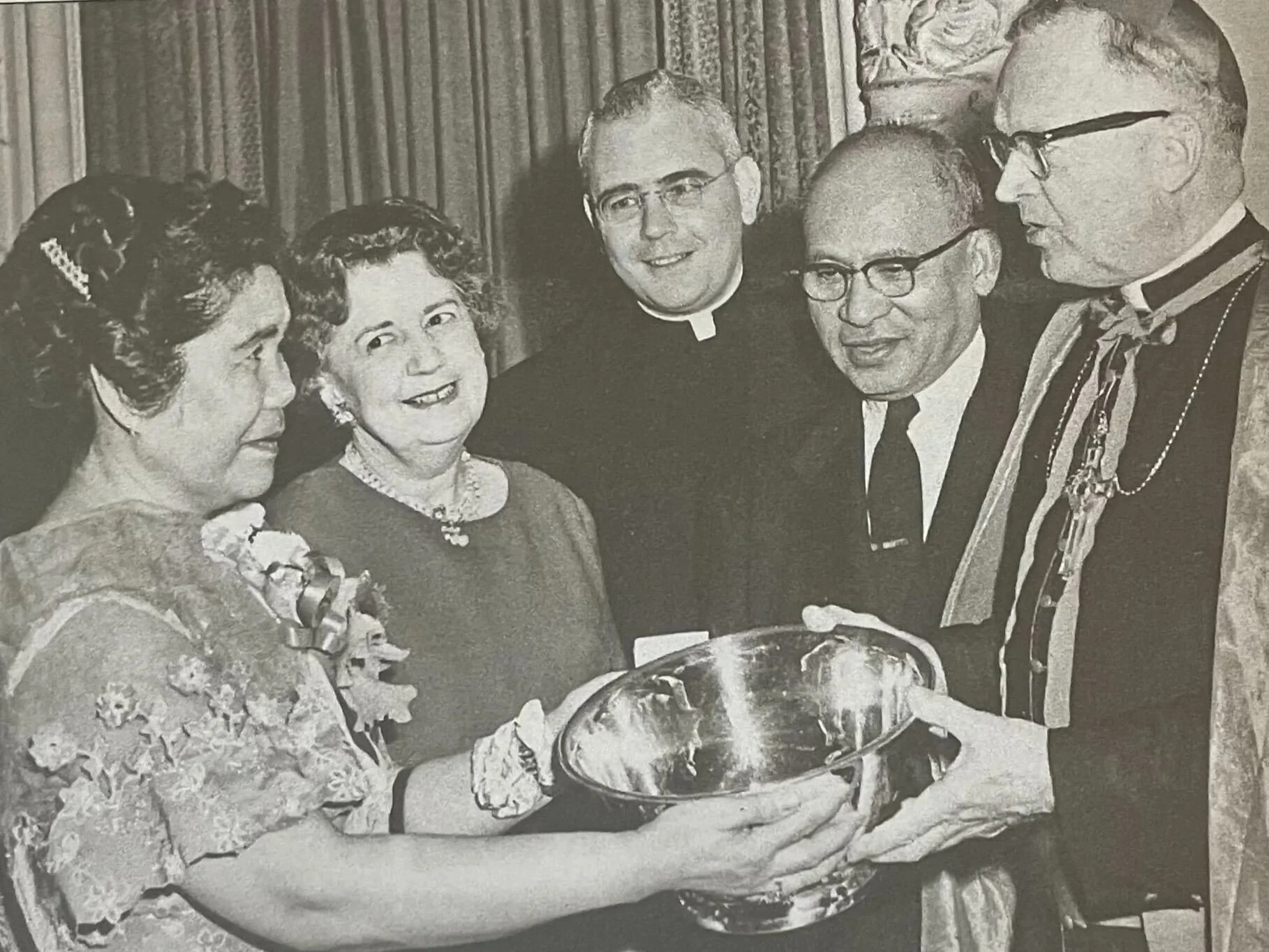
While history books sometimes focus on the public-facing labor of men, Mary (Maria) Beltran was a pioneer of community infrastructure. As the first president of the Filipina Women’s Club, she spearheaded a vital system of mutual aid. Under her leadership, Filipinas pooled their resources to cover medical emergencies and support new arrivals as they stepped off the boats. Mary’s genius was in her "tack"—an ability to align people and stretch resources so that the community’s safety net never broke.

This spirit of "community aid" found its most intimate expression in the home Mary shared with her husband, Santiago. Together, they were congressionally recognized for fostering over 60 homeless children in the Seattle area. In a time when the Filipino community was often transient and segregated, the Beltrans provided a permanent sense of hope. They saw beyond static definitions of kinship, proving that family is not just who you are born to, but who you choose to bring to the table.

Mary Beltran (far left) receiving an award around 1955, Santiago Beltran stands next to the Archbishop.

The Life of the Party

Willy Torin, a visiting reporter from Manila in the 1920s, once described King Street as having "pleasure in their houses" and an air of "unshakable resonance." The Beltrans lived this truth. They were famous for hosting amazing parties—gatherings that weren't just about leisure, but about the joy of being together after a long day’s work.

In our kitchen, we celebrate the bustle of this celebration through the practice of roasting meats and the offering of seconds—and thirds. To us, this hospitality is a form of resistance against erasure. When Mary and Santiago opened their doors, they were creating a "Manilatown" within their own four walls, a space where the Filipino spirit could thrive and be recognized.

Beyond the Map

While scholars today contest exactly where the historic "Manilatown" of Seattle lived, the Beltrans’ legacy offers a different kind of truth. A community is not just a collection of addresses in an archive; it is a network of care. Mary and Santiago remind us that the "Barrio" exists wherever there is a seat at the table for those in need.

As you experience this course, we invite you to celebrate the architects of our community’s hospitality. We honor the Beltrans for showing us that the most enduring way to build a neighborhood is to ensure that no one has to walk its streets alone.

Meryenda: INDIPINOS OF BAINBRIDGE

Foundation: OUR RESEARCH PROCESS

Course 2: VICTRIO VELASCO

Course 3: ELIZABETH & SALVADOR

Course 4: SHARON & BOB

Course 5: TRINITY ORDONA

Course 6: THE BELTRANS

Banuhay: CHERA & GEO

Interlude: BOB’S QUALITY MEATS

Course 8: THE JENKINS

Course 9: DOROTHY & FRED CORDOVA

Course 10: BAYANI BOX

Dialogue: THOUGHTS OR QUESTIONS?

Seattle%27s+International+District-+The+Making+of+a+Pan-Asian+American+Community++Doug+Chin.jpg

BANYUHAY

CHERA & GEO

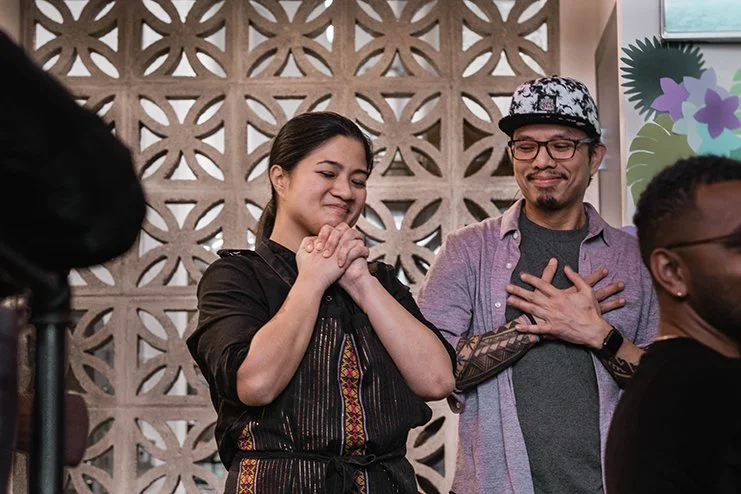
The history of coffee in the Philippines is a global one, moving from the prized Barako beans of the 19th century to the "Sara-Sara" roasted rice tea consumed by farmers who could not afford their own crop. In Seattle—a city defined by its coffee culture—this story is being rewritten by a couple whose work transcends the cafe counter: Chera Amlag and Geo Quibuyen.

Chera Amlag and Geo Quibuyen address the crowd and express gratitude to their guests at a brunch celebrating their opening in the CID. Photo by Auriza Ugalino.

From Community Roots to Coffee Culture

Chera and Geo haven't always been in food, but they have always been in community. Chera, who immigrated from the Philippines to Bremerton in 1986, spent years as an educator and advocate, tutoring first-gen college students and working in public health. Geo, known to many by his stage name Prometheus Brown as one half of the legendary Seattle duo Blue Scholars, has long used his voice to tell the stories of the diaspora—a mission he continues today as a KEXP DJ.

When they opened Hood Famous Cafe + Bar, they weren't just launching a business; they were activating a piece of history. By opening in the Chinatown International District in 2019, they helped restore the visibility of Seattle’s historic Filipino community. Their coffee and desserts—like the now-iconic Ube Cheesecake—became a bridge for a new generation to connect with their heritage in the heart of the city.


The Geographic Bridge

Seattle is often called America’s "coffee shop city," but through Chera and Geo’s vision, it has become a geographic bridge back to the Philippines. They have moved beyond the "boom and bust" cycles of the 19th-century coffee trade to build a model that centers the farmer and the neighborhood. Like the Sara-Sara we explore in our own R&D, their work is about finding depth and flavor in the things that were once overlooked.


A Love for the Neighborhood

In the spirit of Valentine’s week, we celebrate Chera and Geo’s partnership as a form of urban stewardship. Their success in the CID is a reminder that when we invest in our own flavors and stories, we aren't just selling a product—we are "restoring the historic communities" that make Seattle whole.

As you enjoy this course, we highlight the phenomenal products and people—like Chera, Geo, and our own R&D specialist Kasey Acob—who are ensuring that the future of Filipino coffee is as robust and enduring as the Barako of the past. It is a story of how a shared passion for a city and its people can brew something truly transformative.

Meryenda: INDIPINOS OF BAINBRIDGE

Foundation: OUR RESEARCH PROCESS

Course 2: VICTRIO VELASCO

Course 3: ELIZABETH & SALVADOR

Course 4: SHARON & BOB

Course 5: TRINITY ORDONA

Course 6: THE BELTRANS

Banuhay: CHERA & GEO

Interlude: BOB’S QUALITY MEATS

Course 8: THE JENKINS

Course 9: DOROTHY & FRED CORDOVA

Course 10: BAYANI BOX

Dialogue: THOUGHTS OR QUESTIONS?

unsplash-image-TD4DBagg2wE.jpg

AN INTERLUDE

BOB’S QUALITY MEATS

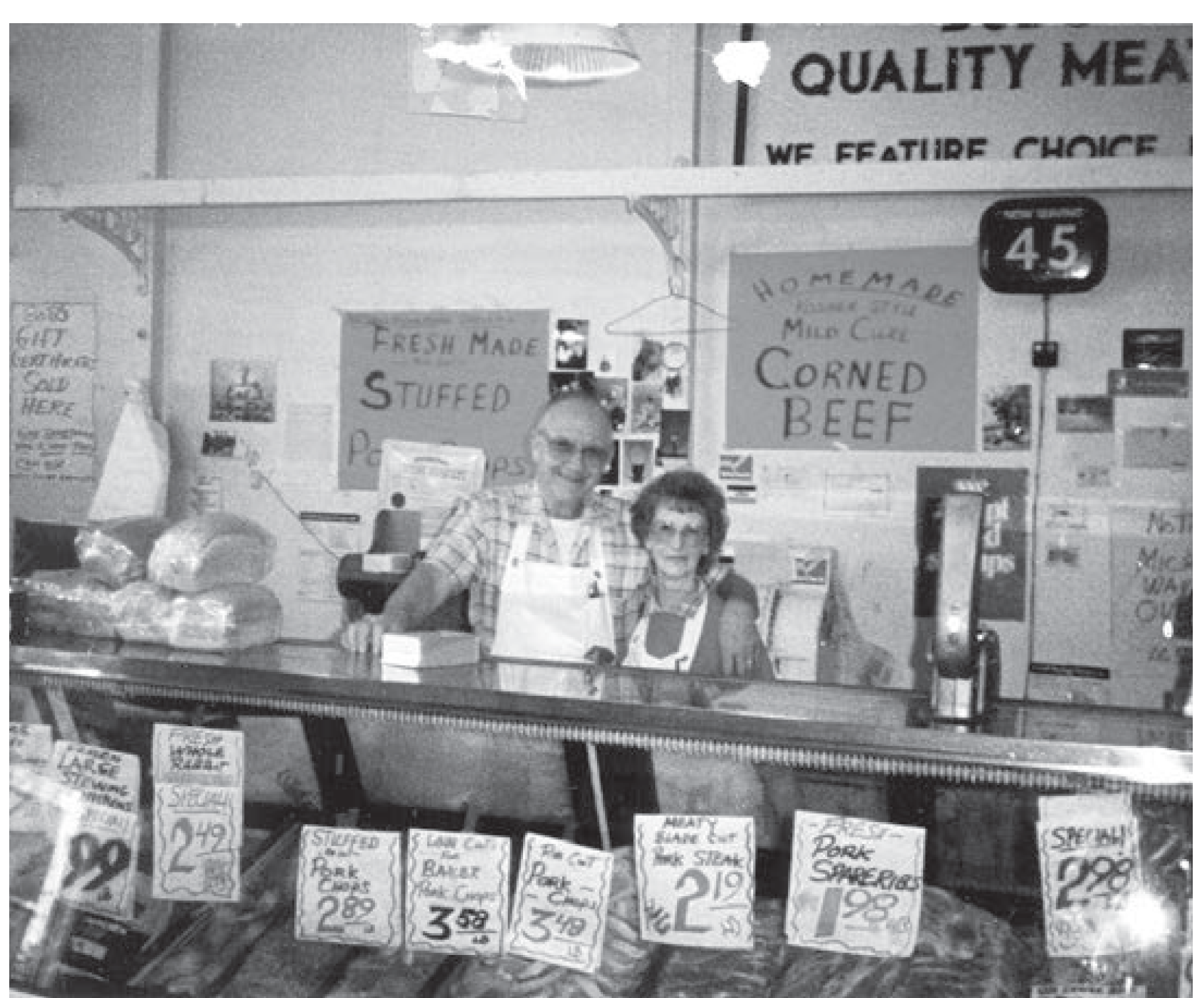
Bob's Quality Meats is a family-owned and operated business in the heart of Columbia City established in the 1960s. Now in it's fourth generation of ownership, Bob's story is a touchpoint to where our restaurant is in Hillman City/Rainier Valley. 

Bob and Louise Ackley in 1989, Rainier Valley Histories Cookbook, 2022

Bob's began in West Seattle, but saw an opportunity to expand to a small meat market on Rainier Ave. Due to exclusionary zoning and demographic changes, Columbia City's was by then mostly African American and African. Bob Ackley, faced with pressure from his supplier to reduce the quality of his product based on racist assumptions of the tastes of the site's new clientele, Bob resisted (Rainier Valley Food Stories, 2022). In Bob Ackley's own words: 

You know, I don’t believe that.

People deserve to have a good place to come buy decent meat, see. I proceeded to develop sausages that were hot until I’d hear, “boy, that is just right.”
— Bob Ackley

Not only did Bob resist the desires of his supplier, but he actively catered to the needs of his new clientele. Perhaps, the highest forms of hospitality can even be subversive.

COURSE 8

THE JENKINS

The story of the Filipino diaspora in Washington does not begin with a labor contract or a port entry; it begins with a marriage. Before the bustling street corners of the King-Street Barrio or the activism of the CID, there were Sergeant Francis Jenkins and Rufina Jenkins—the first Filipino-American family to call this state home.

The Jenkins Family, 1909

A Meeting of Worlds

Francis Jenkins’ life was one of constant movement and resilience. Born in Texas as the son of a fugitive enslaved man and a Mexican woman, he traveled across the United States before joining the military and being sent to the Philippines during the Spanish-American War. It was in Naga City, Bicol, in 1886, that he met Rufina.

Rufina carried her own intricate history as the daughter of a Castilian Spanish General and a Filipina woman. When they married and traveled back to Washington, they weren't just moving to a new house; they were creating a new category of belonging. Settling in Magnolia near Fort Lawton, they began a family that would become a cornerstone of the Pacific Northwest.

From Magnolia to the Central District

To look at the Jenkins family is to see a mirror of the intersections that define the American experience. They didn't just exist; they led. Their descendants moved from that first home in Magnolia to the heart of the Central District, becoming fierce advocates for civil rights, leaders in labor unions, and forces in electoral politics.

In our kitchen, we think about the children in the archives—smiling, tiny, and full of potential. We see them not as figures of "dread" or symbols of war, but as the beginning of a "magic" that continues to this day. The Jenkins family reminds us that when we dig into our own positionality and family history, we find that our identities are not barriers, but bridges.

Love as an Anchor

For a "settler of color," finding home can feel like a journey without an end. But Francis and Rufina show us that love can act as an anchor in a landscape of displacement. They took the complexities of their origins—Texas, Bicol, Mexico, and Spain—and wove them into a singular, enduring Washington legacy.

As you experience this course, we honor the Jenkins family for their courage to be the "first." We celebrate the love that allowed them to settle, to thrive, and to pave the way for every Filipino-American family that has followed in their footsteps.

Meryenda: INDIPINOS OF BAINBRIDGE

Foundation: OUR RESEARCH PROCESS

Course 2: VICTRIO VELASCO

Course 3: ELIZABETH & SALVADOR

Course 4: SHARON & BOB

Course 5: TRINITY ORDONA

Course 6: THE BELTRANS

Banuhay: CHERA & GEO

Interlude: BOB’S QUALITY MEATS

Course 8: THE JENKINS

Course 9: DOROTHY & FRED CORDOVA

Course 10: BAYANI BOX

Dialogue: THOUGHTS OR QUESTIONS?

jenkins-curtain-bg.jpg

COURSE 9

DOROTHY & FRED

There is no Archipelago without the work of Dr. Dorothy Cordova and the late Fred Cordova. Affectionately known to us as Auntie Dorothy and Uncle Fred, their partnership was the bedrock upon which the Filipino-American collective consciousness was built. This Valentine’s week, we honor a love that didn't just look inward at a family, but outward at an entire diaspora, ensuring our stories would never be lost to the "ash" of time.

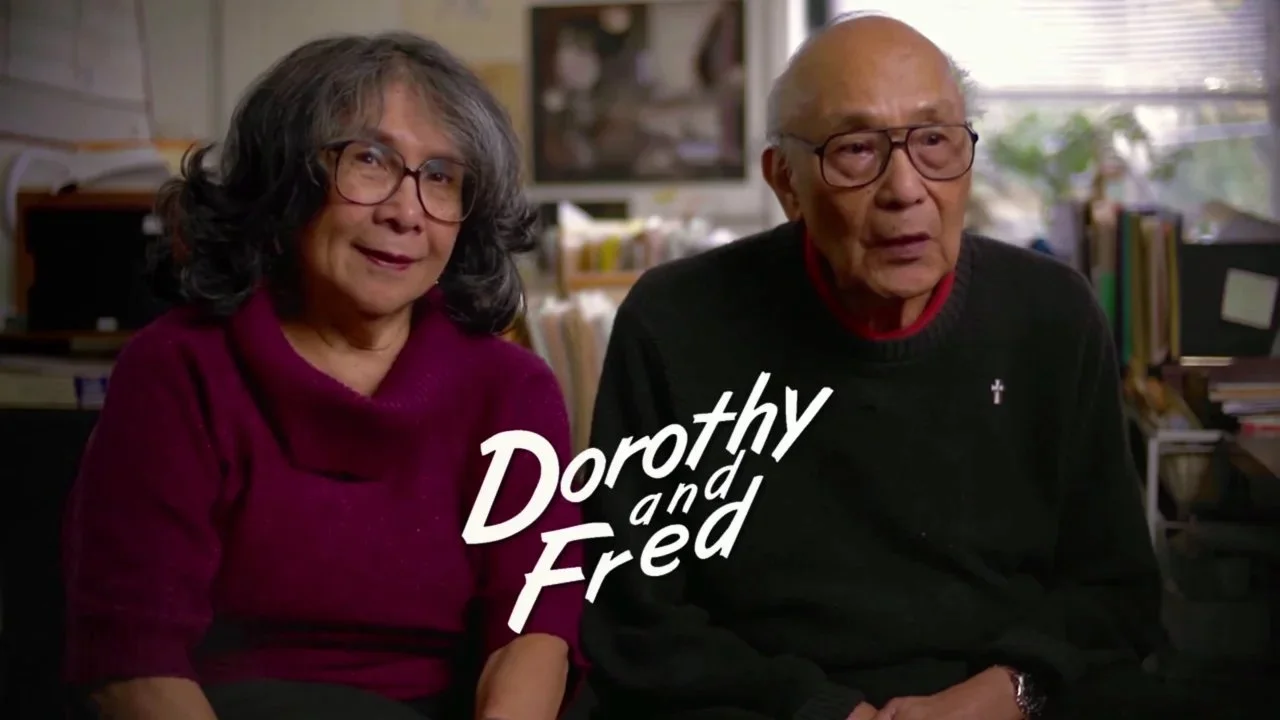
From the Dorothy and Fred documentary, July 2014

A Sanctuary for the Unseen

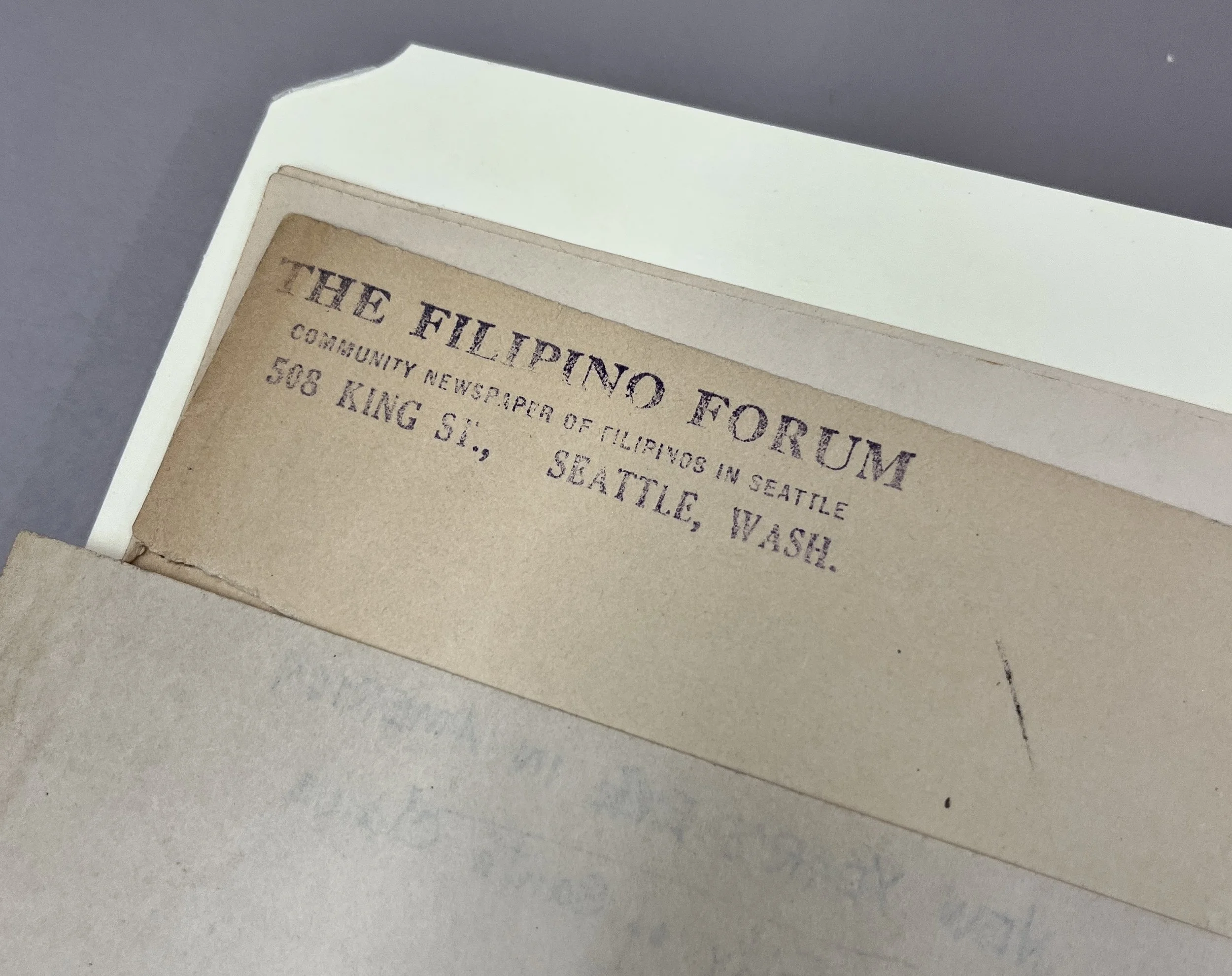
Fred Cordova, an Associate Professor of History at the University of Washington, was an artist of documentation. He possessed the rare gift of seeing value where institutions did not. When the university refused to make space in its archives for the Filipino Forum and other priceless community records, Fred and Dorothy didn't accept the erasure. Instead, they turned their own lives into a sanctuary for our history.

Together, they founded the Filipino American National Historical Society (FANHS) in the 1980s. What began in Seattle sparked a movement of local nodes across the country, dedicated to preserving family records, oral histories, and newspapers. They understood that for a community to have a future, it must first own its past.

Living History

For the Cordovas, history was never meant to be static or silent. They worked tirelessly to bring the archives to life through youth activities, forums, demonstrations, and cultural workshops. They didn't just collect papers; they cultivated a "living history" that bridged the gap between elders and the next generation. From leading solidarity actions to launching the first-ever Filipino history curriculum in Seattle Public Schools, their work was a constant, active movement of love.

Our Bedrock

The Cordovas have remained a constant in every iteration of our menu. This is a deeply intentional choice. Without their instrumental guidance and the foundation they built, the stories we share tonight—from the Indipinos of Bainbridge to the defiance of Trinity Ordona—might have remained in the shadows.

We thank Fred and Dorothy for being our bedrock. They taught us that to love a community is to value its stories when others won't. As you experience this final course, we invite you to honor the curators of our heart—the ones who ensured that we would always have a record of who we were, so we could decide for ourselves who we will become.

Meryenda: INDIPINOS OF BAINBRIDGE

Foundation: OUR RESEARCH PROCESS

Course 2: VICTRIO VELASCO

Course 3: ELIZABETH & SALVADOR

Course 4: SHARON & BOB

Course 5: TRINITY ORDONA

Course 6: THE BELTRANS

Banuhay: CHERA & GEO

Interlude: BOB’S QUALITY MEATS

Course 8: THE JENKINS

Course 9: DOROTHY & FRED CORDOVA

Course 10: BAYANI BOX

Dialogue: THOUGHTS OR QUESTIONS?

Cordova-files-bg.jpg

BAYANI BOX

In the Filipino diaspora, love often travels in cardboard boxes. While coffee and sugar are famous exports of the archipelago, the Philippines’ most profound export is its people—and the relentless care they supply to the rest of the world. This Valentine’s week, we honor the OFW (Overseas Filipino Worker) and the radical, sacrificial love that powers the "Bayani Box."

The Currency of Care

The economy of the Philippines is bolstered by billions in remittances, but the true value of this exchange is found in the "care work" provided by millions of Filipinos working abroad as nannies, housekeepers, and cooks. In the scholarship of Dr. Neferti X. M. Tadir, these workers are often seen as "tragic heroes"—individuals who endure the pain of separation to ensure the survival of those they love.

A Balikbayan box is more than a collection of gifts; it is a bridge built of sweat and distance. It is the material manifestation of a mother’s hug or a father’s presence at a graduation he could not attend. We recognize that this sacrifice is rarely an individual choice, but a response to a global system that often demands the separation of families for the sake of survival.

Hospitality Beyond the Visible

As cooks, our definition of hospitality must expand to include those who are intentionally left unseen. To truly love our community is to demand protections for the workers who sustain us. We ask ourselves: what would it look like if the millions of dollars in aid sent to the Philippines were used to build self-sufficiency and local opportunity, rather than military force? What if the greatest act of love we could offer was a world where no one had to leave home to provide for it?

From Seattle to the Archipelago

In Seattle, organizers and activists work tirelessly to bridge this gap, delivering aid packages and pushing for human rights reforms that have global implications. They remind us that our responsibility as Filipino-Americans is to act locally so that we may see change globally.

When we share the "Bayani Box" course, we aren't just serving food; we are honoring a legacy of devotion that spans oceans. We celebrate the "heroism" of those who work in the shadows, and we commit ourselves to a future where love is no longer measured by the miles between us, but by the strength of the home we build together.


Meryenda: INDIPINOS OF BAINBRIDGE

Foundation: OUR RESEARCH PROCESS

Course 2: VICTRIO VELASCO

Course 3: ELIZABETH & SALVADOR

Course 4: SHARON & BOB

Course 5: TRINITY ORDONA

Course 6: THE BELTRANS

Banuhay: CHERA & GEO

Interlude: BOB’S QUALITY MEATS

Course 8: THE JENKINS

Course 9: DOROTHY & FRED CORDOVA

Course 10: BAYANI BOX

Dialogue: THOUGHTS OR QUESTIONS?

unsplash-image-IZ01rjX0XQA.jpg
 

Questions or thoughts?